How (Not) to Speak of God by Peter Rollins
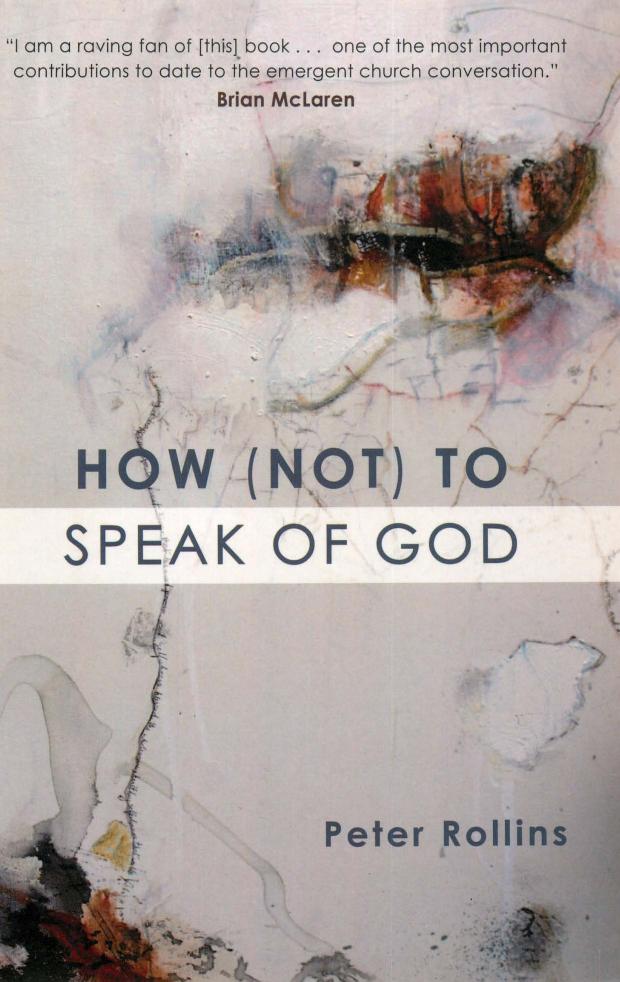
Author:Peter, Rollins
Language: eng
Format: epub, pdf
ISBN: 9781612610719
Publisher: Paraclete Press
From knowledge to love: reading from right to left
In the same way that contemporary religious thought has set transcendence in opposition to immanence, and has considered theism to be the binary of atheism, so ‘orthodoxy’ has been interpreted as necessarily excluding heresy. Orthodoxy (a word derived from ortho, meaning ‘correct’, and doxa, meaning ‘belief’) is generally understood as referring to the embracing of right belief and thus has the connotations of that thinking which claims that we can extract substantive ethical foundations from the Bible. However, there is another way of understanding the word ‘orthodoxy’, one that does not set it in a binary opposition with heresy but embraces the idea that we all get God wrong.
In order to discover this alternative reading, we must break down the word ‘orthodoxy’ into its Greek roots, ortho (right) and doxa (belief), and read them as if one were reading Hebrew – that is, from right to left. Thus ‘right belief’ becomes ‘believing in the right way’. Thus we break down the binary opposition between orthodoxy and heresy by understanding the term ‘orthodox’ as referring to someone who engages with the world in the right way – that is, in the way of love. Here religious knowledge is not something that is opposed to love, nor secondary to it; rather, the only religious knowledge worth anything is love. By understanding orthodoxy in this manner, it is no longer distanced from what the liberation theologians call ‘orthopraxis’. Like orthodoxy, this term is often read straightforwardly as right (ortho) practice (praxis). However, once we understand orthopraxis as ‘practising in the right way’, we see that these two terms really shed slightly different light on the same fundamental approach. This means that the question, ‘What do you believe?’ must always be accompanied by the question, ‘How do you believe?’ We are left then with the idea of orthodoxy and orthopraxis as two terms which refer to a loving engagement with the world that is mediated, though not enslaved by, our reading of the Bible.
We can see an embodiment of this approach to orthodoxy in a situation I once found myself in, where two people from the same church, at different times, approached me to ask if I thought that their church taught the truth. The first person to ask me was a kind and gracious individual who gave of his time and money in a sacrificial manner. The church was not only a comfort to him but also a place of challenge and critique. I listened for a while before saying that I thought his church did emanate truth. Within weeks of this conversation, I met the second person. It was obvious when talking to him that his experience of the same church had been very negative. The teaching was dead to him and the type of projects which the church engaged in had done little to challenge or encourage this individual to live in a genuinely sacrificial manner. Here I found myself saying that this church did not emanate truth (at least for him).
Download
This site does not store any files on its server. We only index and link to content provided by other sites. Please contact the content providers to delete copyright contents if any and email us, we'll remove relevant links or contents immediately.
The Secret Power of Speaking God's Word by Joyce Meyer(3220)
Signature in the Cell: DNA and the Evidence for Intelligent Design by Stephen C. Meyer(3138)
Real Sex by Lauren F. Winner(3023)
The Holy Spirit by Billy Graham(2952)
The Gnostic Gospels by Pagels Elaine(2531)
Jesus by Paul Johnson(2362)
Devil, The by Almond Philip C(2331)
23:27 by H. L. Roberts(2251)
The Nativity by Geza Vermes(2230)
Chosen by God by R. C. Sproul(2164)
All Things New by John Eldredge(2162)
Angels of God: The Bible, the Church and the Heavenly Hosts by Mike Aquilina(1969)
The Return of the Gods by Erich von Daniken(1945)
Angels by Billy Graham(1926)
Knowing God by J.I. Packer(1858)
Jesus of Nazareth by Joseph Ratzinger(1811)
The Gnostic Gospel of St. Thomas by Tau Malachi(1798)
Evidence of the Afterlife by Jeffrey Long(1790)
How To Be Born Again by Billy Graham(1782)
